Affordable housing is often discussed in abstract terms, but in Fort Collins, it has a very real name, history, and measurable impact. That organization is Housing Catalyst, the public housing authority serving Fort Collins, Wellington, and portions of Larimer County. Its work touches thousands of residents, shapes local economic stability, and plays a critical role in ensuring Fort Collins remains a livable, inclusive city—not just for those who can afford rising market prices, but for those who make the city function every day.
To understand why Housing Catalyst matters today, it helps to understand where it came from, how it operates, and what would happen without it.
A Brief History of Housing Catalyst
Housing Catalyst traces its roots back more than five decades. Originally established in 1971 as the Fort Collins Housing Authority, the organization was created through a resolution by the City of Fort Collins in response to federal housing policy changes that encouraged local governments to take a more active role in addressing housing affordability.
Over the decades, the organization evolved alongside Fort Collins itself. As the city grew, housing costs increased, and the complexity of affordable housing development expanded, the Housing Authority adapted its structure and capabilities. A major turning point came in 2010, when organizational restructuring created the capacity for real estate development, allowing the agency to move beyond simply administering vouchers and managing legacy public housing.
In 2016, the organization formally rebranded as Housing Catalyst, reflecting a broader mission: not just to provide housing, but to catalyze community stability, economic mobility, and long-term affordability. Since then, Housing Catalyst has become the largest affordable housing provider and property manager in Northern Colorado, operating as a quasi-governmental entity overseen by a board appointed by the City of Fort Collins.
What Housing Catalyst Does Today
Today, Housing Catalyst operates across three primary functions:
- Affordable Housing Development and Management
- Rental Assistance and Housing Choice Vouchers
- Permanent Supportive Housing for formerly homeless residents
These functions are interconnected and designed to address different layers of housing need.
Affordable Housing Portfolio
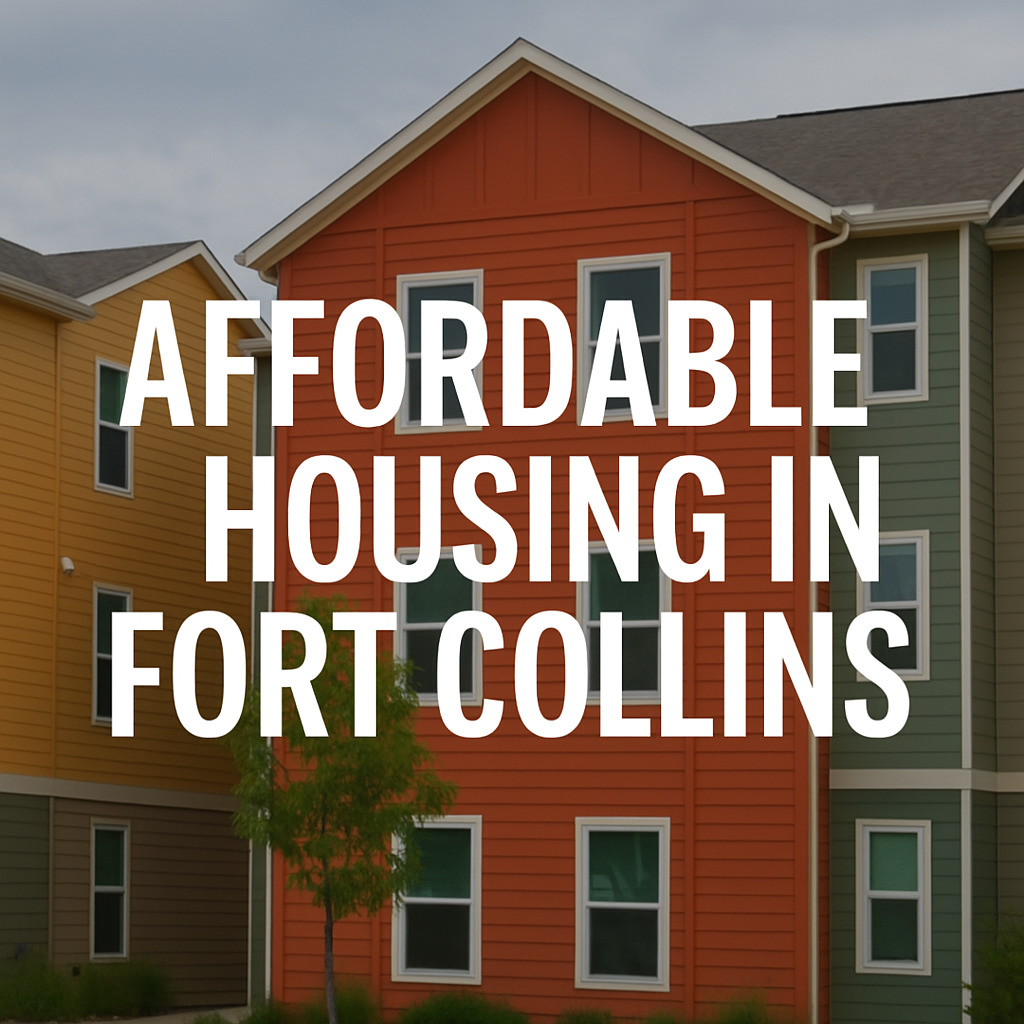
Housing Catalyst currently manages more than 1,100 affordable housing units, serving over 2,100 residents across Fort Collins and Wellington . These homes include apartments, townhomes, and duplexes ranging from one to four bedrooms.
The housing primarily serves households earning 30% to 80% of Area Median Income (AMI)—a critical range that includes service workers, healthcare employees, educators, seniors on fixed incomes, and working families. The average household income among residents is approximately $25,000, underscoring how vulnerable these households are to rent increases, transportation costs, and economic shocks.
Nearly 29% of residents are under the age of 18, highlighting the direct role affordable housing plays in child stability, educational continuity, and family well-being.
Rental Assistance and Vouchers
Beyond brick-and-mortar housing, Housing Catalyst administers a large and complex rental assistance system. The organization manages approximately 1,740 housing vouchers, supporting 2,859 residents, and distributes roughly $20.9 million annually in Housing Assistance Payments to landlords across the region .
This system benefits not only tenants, but also private property owners, who receive reliable, federally backed rent payments. In many cases, voucher programs provide stability during market downturns or periods of vacancy.
Housing Catalyst’s rental assistance programs have also enabled 92 households to exit homelessness, transitioning people from emergency systems into stable, long-term housing.
Measurable Economic Impact
Affordable housing is sometimes framed as a social expense. In reality, Housing Catalyst is a major economic driver.
Between 2018 and 2024, Housing Catalyst generated:
- $510 million in total economic output
- 405 jobs supported annually
- $140 million in worker earnings
- $296.5 million in value added to the regional economy
Perhaps most striking is the return on public investment. For every $1 of City-administered funding, Housing Catalyst generated:
- $47.75 in direct spending
- $67.13 in total economic output
These figures place Housing Catalyst among the highest-return public investments in Fort Collins.
Goals Looking Forward
Housing Catalyst’s goals are shaped by economic reality. Construction costs are rising. Federal funding is uncertain. Land is scarce. At the same time, housing demand continues to grow.
Despite these pressures, Housing Catalyst’s forward-looking goals include:
- Expanding the supply of affordable housing through new developments and partnerships
- Preserving existing affordable housing to prevent loss to market conversion
- Maximizing limited public and private funding through leverage and partnerships
- Maintaining long-term affordability, not just short-term relief
- Integrating sustainability and efficiency into housing design and operations
Recent and pipeline projects—such as Plum Place, Village on Impala, and future downtown-oriented developments—reflect an emphasis on infill, walkability, and access to services, aligning housing with broader city planning goals.
Why Housing Catalyst Matters to Fort Collins
At its core, Housing Catalyst exists because markets alone cannot meet all housing needs, especially in high-demand cities like Fort Collins. Without affordable housing:
- Employers struggle to retain workers
- Commutes lengthen, increasing congestion and emissions
- Families are displaced from schools and support networks
- Seniors and vulnerable residents face housing insecurity
Affordable housing is not about changing Fort Collins—it is about preserving it.
Housing Catalyst helps ensure that the people who teach our children, care for our health, staff our restaurants, and maintain our city can continue to live here. It stabilizes neighborhoods, supports economic resilience, and reduces strain on emergency systems.
In a city defined by quality of life, Housing Catalyst plays a quiet but essential role in making that quality of life possible—for everyone.