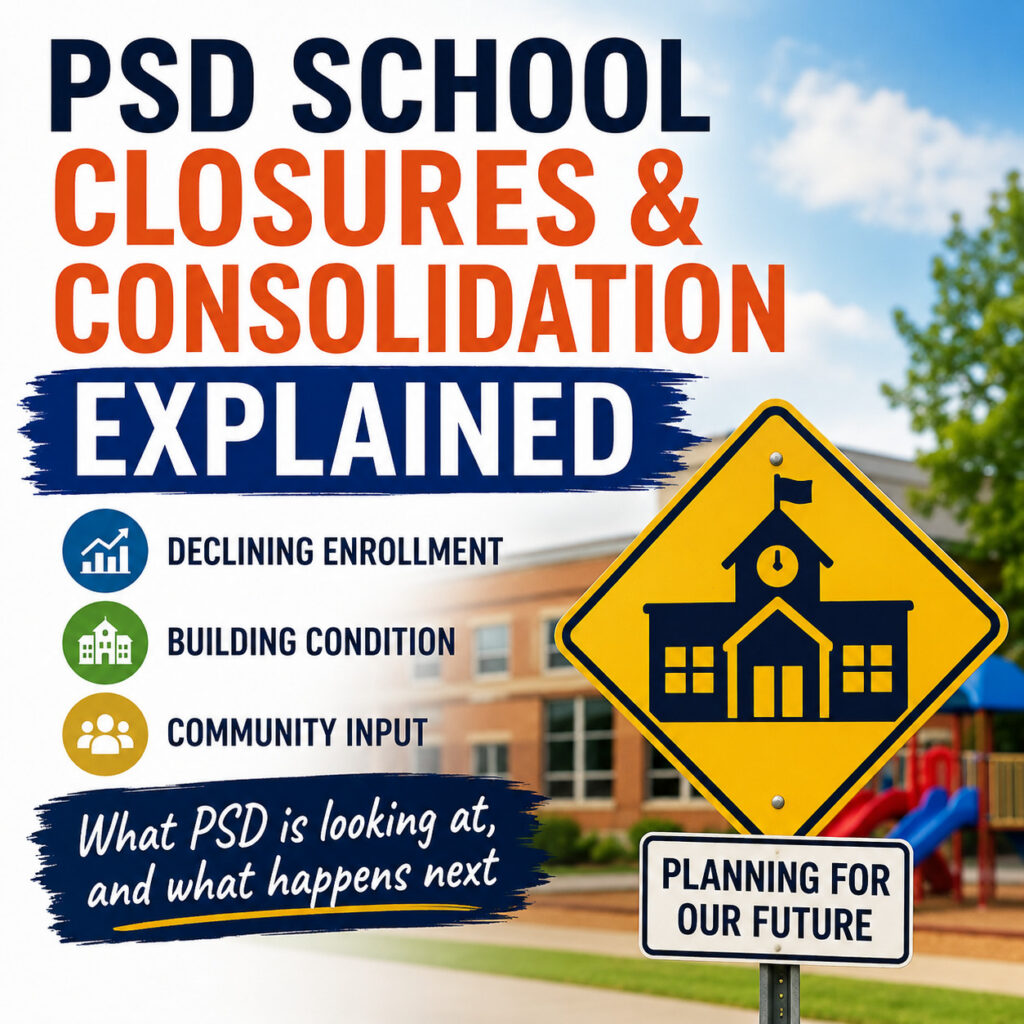
Over the past several months, Poudre School District (PSD) has started an important and emotional conversation about the future of its schools. The district is studying whether some schools may eventually need to be consolidated, relocated, or closed due to declining enrollment, aging buildings, and financial pressures.
For many families, this topic can feel scary or confusing. Schools are more than just buildings. They are places where kids learn, grow, make friends, play sports, perform in concerts, and build memories. That is why PSD says it wants this process to be thoughtful, transparent, and community-focused.
So what exactly is happening, and why now?
The Main Problem: Fewer Students in Some Schools
According to PSD Superintendent Brian Kingsley and the district’s proposed policies, one of the biggest challenges is declining enrollment in certain neighborhoods and schools.
When fewer students attend a school, the district still has to pay for:
- teachers
- utilities
- maintenance
- transportation
- technology
- and building repairs
But with fewer students, there is less funding coming into the school system overall.
The district says that when enrollment drops too low, it becomes harder to provide strong programs like:
- art
- music
- physical education
- extracurricular activities
- advanced classes
- and student support services
In simple terms, PSD believes some schools may be too empty to operate efficiently long-term.
What Does “Consolidation” Mean?
PSD is using several important terms in this discussion.
The proposed district policy defines:
- A “school closure” as permanently closing a school.
- A “school consolidation” as combining two or more schools into one building.
- A “relocation” as moving a school to a different location.
The district has not officially announced any schools that will close or consolidate. Right now, they are still studying the issue and gathering public feedback.
How PSD Plans To Study the Problem
PSD has created a long-term planning process that stretches from early 2026 into 2028.
The district’s timeline includes:
- Listening to the community
- Developing criteria
- Preparing recommendations
- Board review
- Implementation planning
- Reviewing possible future uses for buildings
The district says formal recommendations could be presented to the Board of Education by October 2026, and any approved changes would happen no earlier than the 2027-2028 school year.
That means no immediate school closures are expected.
What Data Is PSD Looking At?
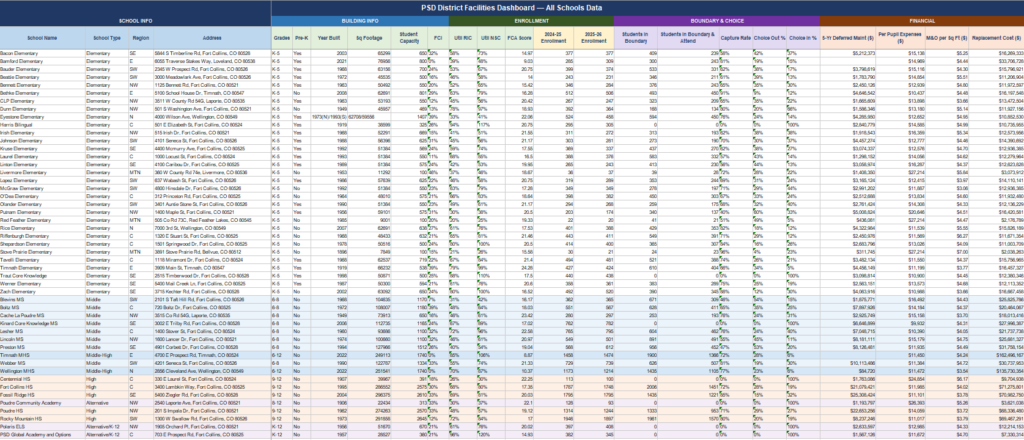
One of the most important parts of this process is the district’s new facilities dashboard and glossary. These tools explain exactly what PSD is studying when looking at schools.
Here are the main categories.
1. Building Utilization
This is one of the biggest data points.
“Building utilization” means how full a school is compared to how many students the building can hold.
For example:
- A school designed for 500 students but only serving 250 students would be operating at about 50% utilization.
- PSD says a school is considered “full” when it reaches 95% utilization.
The district uses two different utilization measurements:
- Room Index Capacity (RIC)
- National Standard Capacity (NSC)
These calculations help PSD compare schools fairly across the district.
2. Enrollment Trends and Projections
PSD is also studying:
- current enrollment
- historical enrollment
- and projected future enrollment
The district’s projections include things like:
- neighborhood population changes
- housing trends
- student mobility
- and birth rates
Some neighborhoods in Fort Collins and Northern Colorado are growing, while others are aging and have fewer school-aged children than they did years ago.
This means some schools are becoming less full over time.
3. Building Condition and Maintenance
PSD is also evaluating the physical condition of school buildings.
The district uses something called a Facility Condition Assessment (FCA). This is a detailed inspection of a school’s:
- roof
- heating and cooling systems
- electrical systems
- plumbing
- playgrounds
- sidewalks
- safety systems
- and more
Buildings receive scores based on their condition.
The glossary explains:
- Lower scores generally mean fewer maintenance needs
- Higher scores mean buildings may need more upgrades or repairs
PSD is also studying deferred maintenance, which means repairs that have been postponed due to cost or timing.
4. Transportation and Walkability
The district says it is not only looking at money and building size.
PSD also plans to study:
- transportation access
- bus ride length
- traffic safety
- and walkability for students and families
This matters because combining schools could mean longer commutes for some students.
5. Programs and Student Services
Another major focus is protecting student opportunities.
According to the proposed policies, PSD wants to maintain strong access to:
- art
- music
- physical education
- extracurricular activities
- advanced classes
- social emotional supports
- before and after school care
- and early childhood programs
The district also specifically says it wants to protect continuity of services for students with Individualized Education Plans (IEPs).
In other words, PSD says it does not want students losing critical support systems during transitions.
Community Feedback Has Played a Big Role
Superintendent Brian Kingsley shared that thousands of community members have already participated in the process.
According to his letter:
- 957 families participated in meetings and discussions
- More than 7,500 survey responses were submitted in three languages
Families ranked these as the most important factors:
- Building condition and quality
- Building utilization
- Enrollment projections
Families also said they most wanted to preserve:
- school programs
- support for students with IEPs
- and neighborhood proximity
That feedback helped shape the proposed policies now being reviewed by the Board of Education.
Why This Conversation Matters
School consolidation is never easy.
For some families, schools are deeply tied to neighborhood identity and community pride. Many parents worry about:
- larger class sizes
- longer bus rides
- losing neighborhood connections
- or changes to school culture
At the same time, the district believes it must plan ahead financially and operationally to avoid larger problems in the future.
PSD says the goal is to create “thriving educational environments” while balancing enrollment, building conditions, and long-term sustainability.
What Happens Next?
Right now, PSD is still in the study and recommendation phase.
The district says it will continue:
- analyzing data
- gathering community feedback
- reviewing school facilities
- and discussing possible options
The Board of Education has not approved any closures or consolidations at this time.
Formal recommendations are expected later in 2026, with any possible changes happening no earlier than the 2027-2028 school year.
For families in PSD, this will likely remain one of the biggest local conversations over the next year as the district works to balance educational quality, finances, facility conditions, and the future needs of Northern Colorado students.