If you’re thinking about moving to Fort Collins—or you already live here and want to stay informed—this City Council work session covered some of the most important topics shaping the city’s future.
The March 24, 2026 work session focused on three major areas:
- Public transit changes
- Housing and development improvements
- Downtown parking updates
These are not small topics. They directly affect how people move around the city, how housing gets built, and what it costs to spend time downtown.
Here’s a clear, fact-based breakdown of what happened and what it means.
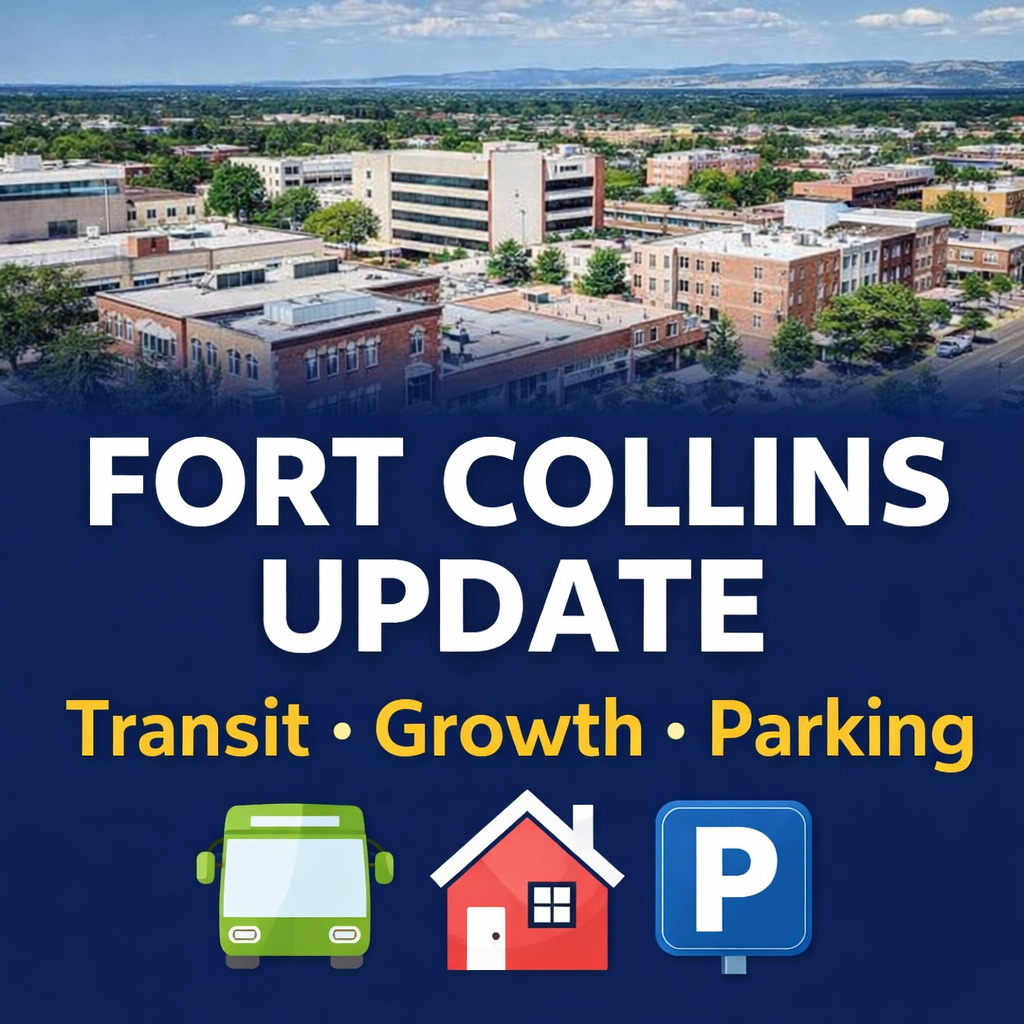
Public Transit Is Changing—And It’s About Tradeoffs
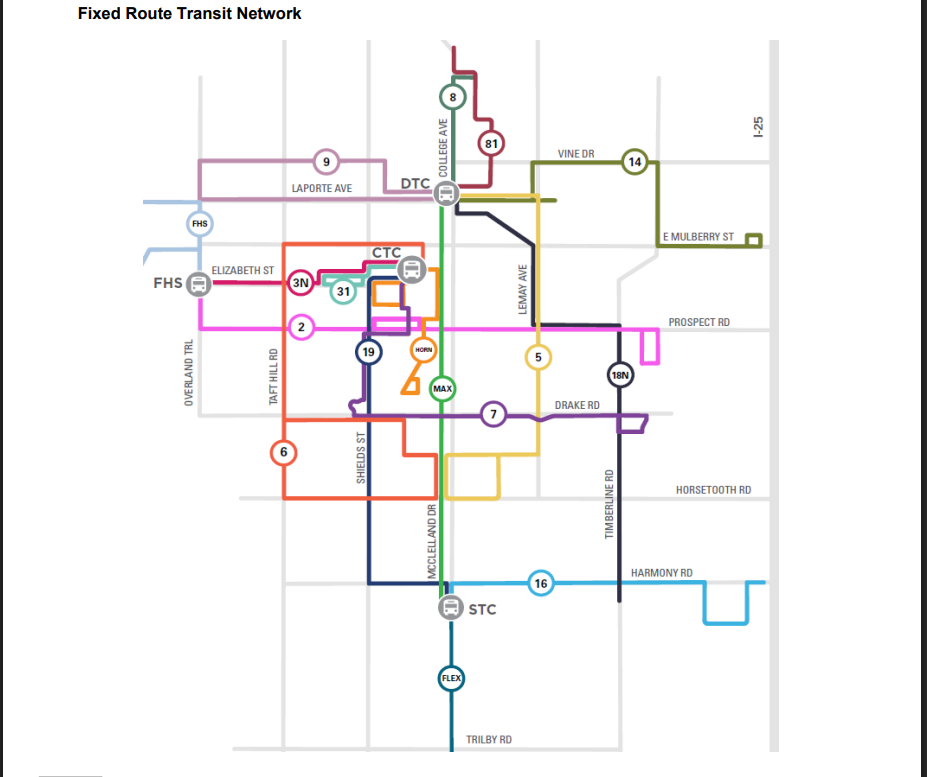
Fort Collins is planning a major update to its bus system (Transfort). The goal is simple: make the system more reliable and more useful—but within budget.
Why Changes Are Needed
Transit costs have increased significantly over the last few years. According to the meeting packet, expenses are up about 50% since 2019, driven by things like labor, fuel, and maintenance .
At the same time, funding hasn’t kept up. Some outside funding sources have gone away, and overall revenue is not growing fast enough to match costs .
Because of this, the city said it needs to “right-size” the system—meaning it cannot offer the same level of service everywhere.
What’s Actually Changing
The new plan focuses on a key shift:
👉 Fewer routes, but better service on the main ones
Instead of spreading buses thin across the city, Fort Collins plans to:
- Increase frequency on high-demand routes
- Improve reliability and timing
- Focus on key destinations (schools, healthcare, shopping, CSU)
- Keep the system fare-free
The system will also move toward a grid-style layout, which is easier to navigate and more efficient .
The Tradeoff (This Is the Big One)
There is no way around it: improving frequency means reducing coverage.
- Some lower-performing routes may be reduced or adjusted
- Certain areas may have less direct access
- Dial-A-Ride service areas may shrink slightly
At the same time, the city is trying to protect access for people who rely on transit by offering mitigation options like expanded taxi subsidies and grandfathering some services .
What This Means for You
- If you use main routes: Expect more reliable service
- If you live farther from core routes: You may have fewer options
- If you’re relocating: Fort Collins transit is improving—but still limited compared to larger cities
The City Is Trying to Make Housing Easier to Build
The second major topic was called “Affordable & Sustainable Growth.”
In simple terms, the city is trying to fix how development works.
What’s the Problem Today?
City staff outlined several challenges:
- Regulations are complex and sometimes conflict with each other
- The process can be slow and unclear
- Different departments don’t always align
- Costs and fees can add up quickly
These issues can delay projects and increase housing costs .
What the City Wants to Do
The plan focuses on two main areas:
1. Improve the Process
- Faster approvals
- Better customer experience
- Updated technology (like the “FC Clear” system)
- Clearer expectations
2. Reduce Regulatory Barriers
- Simplify zoning and land use rules
- Align conflicting regulations
- Make development more predictable
The goal is to make it easier—and more consistent—to build housing and other projects.
How They’ll Measure Success
The city is looking at metrics like:
- Faster approval timelines
- More projects approved “by right” (without special approvals)
- More housing built in key areas
- A better mix of housing types
What This Means for You
- Buyers: This could help stabilize or slow price increases over time
- Sellers: More inventory could mean more competition in the future
- Relocators: Fort Collins is actively trying to manage growth—not stop it
This is a long-term effort, not a quick fix. But it’s one of the most important initiatives happening right now.
Downtown Parking Is Becoming More Structured (and More Expensive)
The third major topic was downtown parking—and this is where things get very real for day-to-day life.
Why Parking Is Changing
The city says the current parking system is not financially sustainable.
- There is a long-term funding gap
- Enforcement and compliance are inconsistent
- Demand continues to grow
To fix this, Fort Collins is moving toward a more managed system.
Key Changes Already Happening
Some updates are already in motion:
Increased Fines
- Overtime parking violations are rising (up to $75+)
- Restricted violations increasing to ~$35
- ADA and safety-related violations will be higher
More Enforcement
- Now enforcing 6 days per week (including Saturdays)
- Extended hours into the evening
Permit Price Increases
- Permits increasing by about $10 at renewal
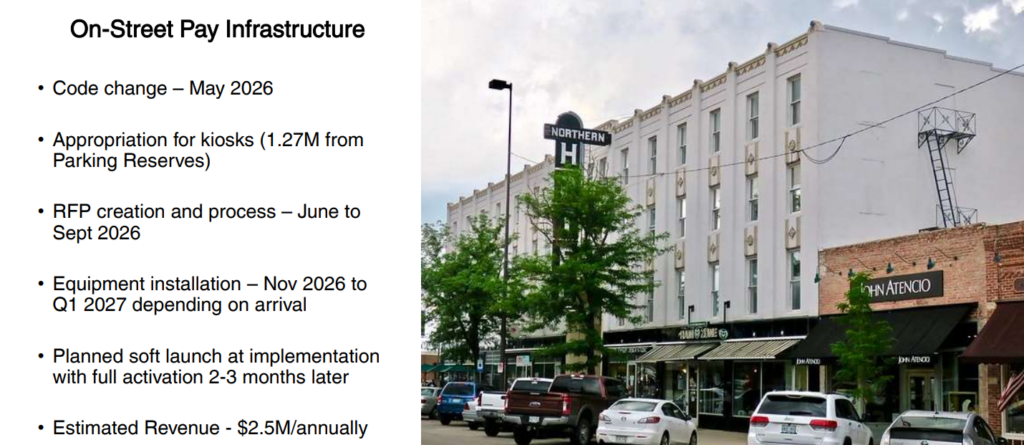
Technology and Infrastructure Changes
- New license plate readers are planned for garages
- Updated enforcement vehicles and systems
- A new parking demand study is underway
The Big Issue: Downtown Workers
One of the most discussed concerns was how these changes affect people who work downtown.
Many employees:
- Work late hours
- May not have access to transit
- Currently rely on street parking
The city is exploring solutions like:
- Discounted employee permits
- Employer-sponsored parking options
- Alternative parking partnerships
But free parking for employees is not currently planned.
What This Means for You
- Visitors: Expect more structured parking and fewer “free” options
- Downtown workers: Costs may increase over time
- Businesses: Parking turnover could improve, helping customer access
The Big Picture: A City Balancing Growth, Cost, and Experience
Across all three topics, there was a clear theme:
Fort Collins is trying to balance growth with financial reality.
- Transit can’t expand without more funding
- Development needs to be easier—but still controlled
- Parking needs to support downtown—but also pay for itself
None of these decisions are simple. Every change involves tradeoffs.
What Happens Next
Here’s what to watch moving forward:
Transit
- Changes begin rolling out in August 2026
- Full implementation continues into 2027
Development Reform
- Ongoing work through an ad hoc committee
- Updates will happen in phases over time
Parking
- Fine increases and enforcement already underway
- Technology upgrades coming in 2026–2027
- Larger system changes likely in the next few years
Final Thoughts
If you’re considering Fort Collins, this meeting gives you a clear snapshot of where the city is headed.
- It’s growing—but carefully
- It’s investing—but within limits
- It’s trying to improve systems that directly affect everyday life
And most importantly:
The city is making decisions now that will shape how Fort Collins feels to live in over the next 5–10 years.
If you care about traffic, housing, affordability, or downtown experience—this is exactly the kind of meeting that matters.